
Goalie Chest & Arm
Showing 32 of 32
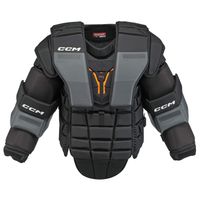
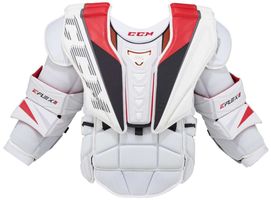
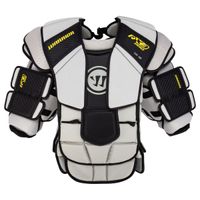
Warrior
Warrior Ritual X3 Pro Chest & Arm Protector Senior0
Warrior Ritual X3 Pro Chest & Arm Protector Senior – goalie chest and arm protector. Choose the size and version to match your setup.
from€420.13*€672.18
Show options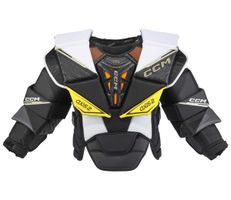
Warrior
Warrior Ritual X4 E Chest & Arm Protector Senior0
Warrior Ritual X4 E Chest & Arm Protector Senior – goalie chest and arm protector. Choose the size and version to match your setup.
from€218.45*€449.50
Show optionsWarrior
Warrior Ritual X4 PRO+ Chest & Arm Protector Senior0
Warrior Ritual X4 PRO+ Chest & Arm Protector Senior – goalie chest and arm protector. Choose the size and version to match your setup.
from€566.39*€798.24
Show optionsBauer
Bauer Supreme SHADOW Chest Protector Senior0
Bauer Supreme SHADOW Chest Protector Senior: CURV. Choose the size and version to match your setup.
from€588.19*€840.29
Show optionsCCM
CCM EFLEX 7 Chest & Arm Protector Senior0
CCM EFLEX 7 Chest & Arm Protector Senior: AERTEC, D3O. Choose the size and version to match your setup.
from€462.14*€630.17
Show optionsWarrior
Warrior Ritual X5 RTL Goalie Chest and Arm Protector Senior0
Warrior Ritual X5 RTL Goalie Chest and Arm Protector Senior with AxyFlex2, CoverEDGE+ and adjustable shoulder coverage.
from€578.99*€798.24
Show optionsBauer
BAUER Supreme FUSE Chest Protector - Sr.0
BAUER Supreme FUSE Chest Protector - Senior: THERMOCORE ZERO, CURV. Choose the size and version to match your setup.
from€588.19*€840.29
Show optionsBauer
BAUER Elite Chest Protector - Sr.0
BAUER Elite Chest Protector - Senior – goalie chest and arm protector. Choose the size and version to match your setup.
from€378.11*€504.16
Show optionsBauer
BAUER GSX Chest Protector - Sr.0
BAUER GSX Chest Protector - Senior – goalie chest and arm protector. Choose the size and version to match your setup.
from€268.87*€336.09
Show optionsVaughn
VAUGHN Ventus ION Pro Select Chest Protector - Sr.0
VAUGHN Ventus ION Pro Select Chest Protector - Senior – goalie chest and arm protector. Choose the size and version to match your setup.
€705.84*€1,050.38
Warrior
Warrior Ritual X4 E+ Chest & Arm Protector Intermediate0
Warrior Ritual X4 E+ Chest & Arm Protector Intermediate – goalie chest and arm protector. Choose the size and version to match your setup.
€252.06*€504.12
Bauer
BAUER Elite Chest Protector - Int.0
BAUER Elite Chest Protector - Intermediate – goalie chest and arm protector. Choose the size and version to match your setup.
from€361.30*€470.55
Show optionsWarrior
Warrior Ritual X5 RTL Goalie Chest and Arm Protector Intermediate0
Warrior Ritual X5 RTL Goalie Chest and Arm Protector Intermediate with AxyFlex2, CoverEDGE+ and adjustable shoulder coverage.
€419.33*€546.13
Warrior
Warrior Ritual X5 Pro Goalie Chest and Arm Protector Intermediate0
Warrior Ritual X5 Pro Goalie Chest and Arm Protector Intermediate with AxyFlex, CoverEDGE+ and adjustable shoulder coverage.
from€326.89*€399.08
Show optionsCCM
CCM EFLEX 7.9 Chest & Arm Protector Intermediate0
CCM EFLEX 7.9 Chest & Arm Protector Intermediate: AERTEC, ADPT. Choose the size and version to match your setup.
€264.66*€378.07
Bauer
BAUER Vapor FLYLITE Goalie Chest & Arm Protector Intermediate0
Lightweight elite goalie chest and arm protector for Intermediate players with FLEXWRIST, DEFENSE CLOUD TECH, AEROLITE Shield, SHOCKLite and adjustable CURV arms.
€504.16*€630.21
CCM
CCM YTFlex 3 Chest Protector Youth0
CCM YTFlex 3 Chest Protector Youth – goalie chest and arm protector. Choose the size and version to match your setup.
€91.60*€117.56
Bauer
Bauer Prodigy GSX Chest- & Arm Youth 20240
Bauer Prodigy GSX Chest- & Arm Youth 2024 – goalie chest and arm protector. Choose the size and version to match your setup.
€117.61*€151.22
Warrior
Warrior Ritual X4 E Chest & Arm Protector Youth0
Warrior Ritual X4 E Chest & Arm Protector Youth – goalie chest and arm protector. Choose the size and version to match your setup.
€83.99*€167.98
CCM
CCM PHENOM Youth Goalie Arm & Body Protector0
CCM PHENOM Youth Goalie Arm & Body Protector – clear sizing and fit guidance.
from€79.79*€100.84
Show optionsWarrior
Warrior Youth X5 Chest and Arms - JR.0
Warrior Youth X5 Chest and Arms - JR.: Warrior product with model-specific features and variant selection.
€142.02*€167.98
Warrior
Warrior Junior X5 Chest and Arms - JR.0
Warrior Junior X5 Chest and Arms - JR.: Warrior product with model-specific features and variant selection.
€217.65*€273.03
Bauer
BAUER Vapor FLYLITE Goalie Chest & Arm Protector Senior0
Elite goalie chest and arm protector with FLEXWRIST, DEFENSE CLOUD TECH, CURV composite, AIRFLOW Spine and lightweight SHOCKLite protection.
€588.19*€840.29
Warrior
Warrior Ritual X5 Pro Goalie Chest and Arm Protector Senior0
Warrior Ritual X5 Pro Goalie Chest and Arm Protector Senior with AxyFlex, CoverEDGE+ and adjustable shoulder coverage.
€402.48*€504.12
Bauer
BAUER FLY-W Chest Protector - Sr.0
BAUER FLY-W Chest Protector - Senior: THERMO CORE ZERO, CURV. Choose the size and version to match your setup.
€588.19*€840.29


Goalies in ice hockey face fast shots and stick contact. A chest and arm protector helps cover the shoulders, chest, back and arms while allowing you to move in the crease. Compare the fit, construction and intended level of play before choosing.
Advice & details: Goalie Chest & ArmView selection advice, features and care
Ice hockey goalie chest and arm protection
Key features of goalie chest and arm protection
- Impact protection: Padding and protective components are designed to manage and distribute impacts around the shoulders and torso. No equipment eliminates the risk of injury.
- Mobility: Articulated designs balance coverage with the movement needed to react to shots.
- Adjustable fit: Many models include straps or other adjustment points to keep the protector positioned comfortably.
- Durable materials: Compare fabrics, reinforcement and construction for your training and game workload.
- Confidence: A comfortable, secure protector helps you focus, while safe technique and regular equipment checks remain essential.
Finding the right goalie protector
It should sit securely without restricting movement. A protector that is too large can shift, while one that is too small may leave gaps or cause discomfort. Compare sizes, materials and construction with your level of play and the rest of your equipment.
Goalie protection for beginners
Choose a balance of suitable protection, comfort and price without unnecessary bulk. Adjustment can help refine fit as a young player grows, but the protector must fit correctly now: do not buy an oversized model to grow into. Compare the intended use and sizing information of recognised equipment brands.
Protection for professional goalies
Frequent, intense play calls for a protector designed for that workload. Advanced models may use different impact-management materials, additional padding and more adjustment options. Compare the features and fit while ensuring you retain the mobility needed in the crease.
Combining your goalie equipment
- Goalie mask: Provides head and face coverage. Check fit, certification, condition and visibility.
- Leg pads: Cover the legs during saves and should work with your knee protection without restricting required movement.
- Catching glove and blocker: Help you catch or deflect pucks while protecting the hands. Check your handedness and fit.
- Goalie groin protection: Choose a goalie-specific design with appropriate fit and coverage.
- Neck and throat protection: Different products address different hazards. A mask-mounted throat protector does not replace a cut-resistant neck guard where one is required; check the product’s intended use and competition rules.
- Goalie pants: Cover the hips, thighs and seat and must work with your pads and chest protector.
- Torso protection: A goalie chest and arm unit incorporates chest and back coverage. Check that it overlaps correctly with other equipment; use extra components only as specified by the manufacturer.
- Elbow protection: Check the elbow coverage and movement of your goalie unit. Extra protection must be compatible with its design.
Compare our goalie chest and arm protectors
Fit and appropriate construction are central to goalie equipment selection. Browse the models and compare coverage, movement and adjustment; ask our team if you are unsure which protector suits your needs.
Frequently asked questions
1. How often should a goalie chest and arm protector be replaced?
This depends on intensity of use, materials, care and condition. Inspect it regularly and have cracks, broken components, worn padding or damaged straps assessed. Replace equipment that can no longer provide its intended fit and protection.
2. How do lower-priced and higher-priced protectors differ?
Differences can include materials, padding layout and adjustment. Higher-tier models may use different impact-management technology and additional fit options, while simpler models have fewer features. Price is not a substitute for checking suitability and fit.
3. Can parts of a goalie protector be replaced separately?
Some models have replaceable straps, pads or other components. Availability and permitted repairs depend on the manufacturer and model. Ask us about approved replacement parts before replacing a component, particularly in a protective area.